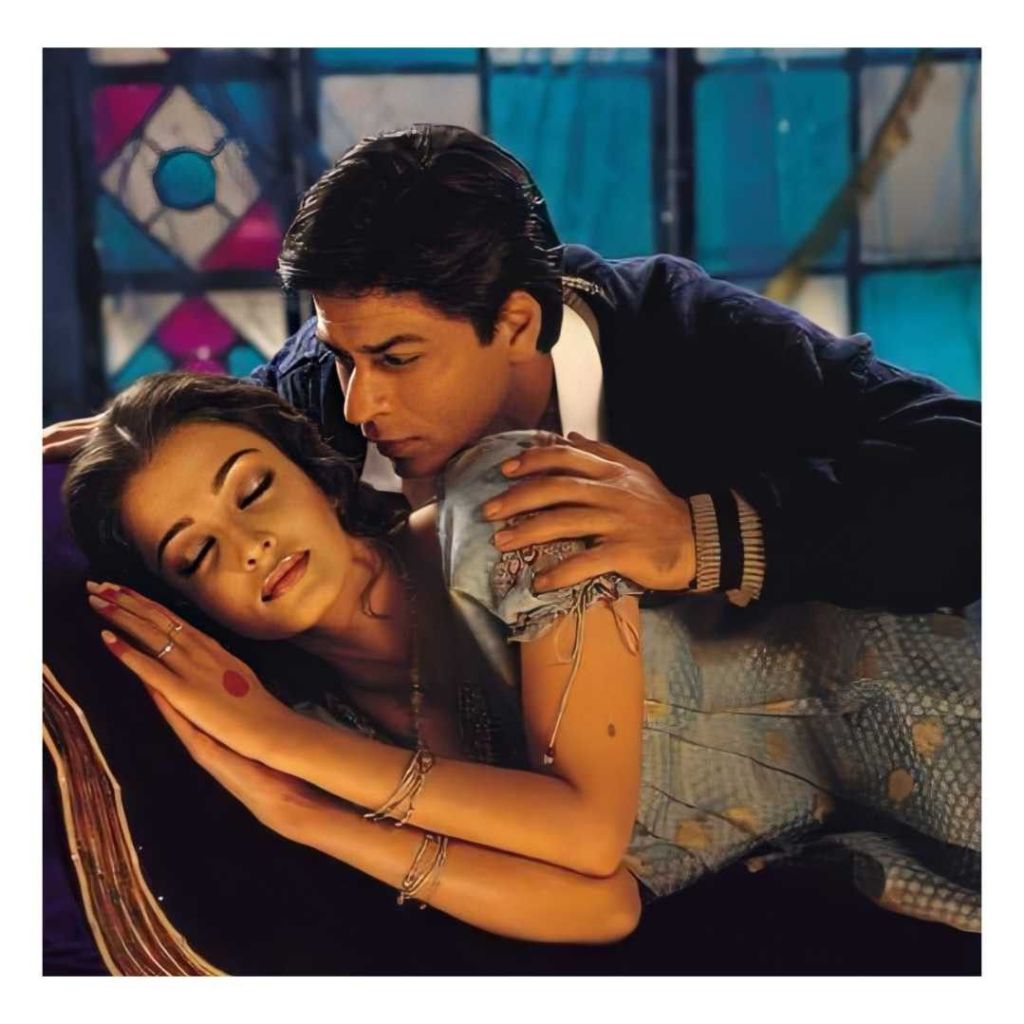
My first memory of Devdas is not from a cinema hall. It is from the summer of 2002 in Mussoorie. The air was bright and sharp with mountain light fading away, and I found myself standing outside an STD booth. There, on a slightly faded poster, I saw Shah Rukh Khan holding a cigar. A hat tilted just so. On his right was Aishwarya Rai, and on his left Madhuri Dixit. Both veiled, not in a way that hid anything, but in a way that framed their faces like a soft hush around a song. They were glowing. Still. Beautiful in a way that felt suspended in time.
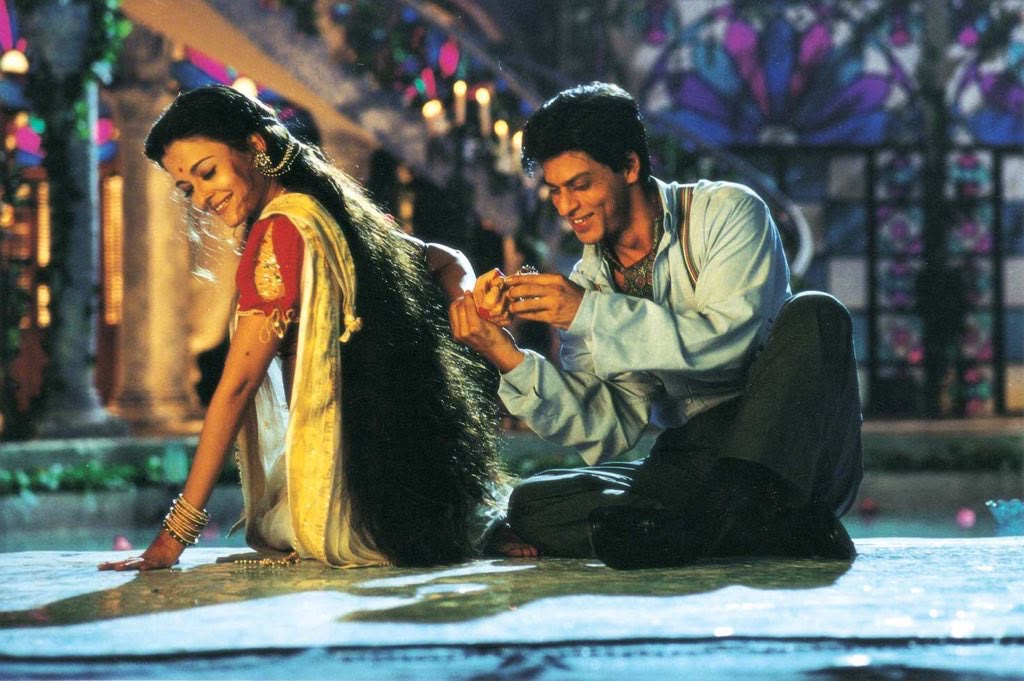
Something about that poster felt old. Not old like vintage or dated, but old like memory. Old like something that had existed long before me. And because I had recently seen Shah Rukh perform on the tribute shows like Showman Of The Millennium, singing and dancing, giving tribute to Raj Kapoor, I assumed this poster was something like that too. A homage. A performance. A celebration of cinema’s past. I did not know yet that this was a new film.
We did not go to watch it. I was not even ten. My aunt, my companion in all things cinema, told me I might not understand it yet. She said it had an old-world tone, songs and silences that children might not sit with. But even while saying this, she kept marvelling at how beautiful Madhuri and Aishwarya looked, how grand everything was. I listened, but I did not insist. This was one year before I would fall in love with Shah Rukh Khan, so I let it pass.

I watched Devdas for the first time sometime later on television. I had a fever. I remember lying on my bed, my body warm and heavy, watching the film almost like a reverie. I absorbed it without fully feeling it. The memory is soft around the edges, like warm cloth, like sleep.
Then came December 2003. On the twenty-fifth, I watched Kal Ho Naa Ho. That same month, Sony TV was running a Shah Rukh Khan film festival, screening his film every weekend. The last film in the lineup was Devdas. I watched it again. This was after falling in love, thanks to Kal Ho Naa Ho.
This time, something inside me opened. I began crying from the interval onwards. The kind of crying that is quiet and certain, not dramatic but inevitable. And when the film ended, I did not move for a while. I just lay there, still, feeling something tender and deep that I did not yet have words for.
Yes, the film was beautiful. That did not need saying. But it was Shah Rukh. The way his eyes held entire monsoons. The way he carried sorrow and pride and love as if each belonged to the same heart. The way his silences spoke. The way he performed devotion and destruction with the same grace. Every gesture, every pause, every collapse felt necessary. I do not know if anyone else could have played Devdas like that. I am not sure anyone ever will. That was the beginning.
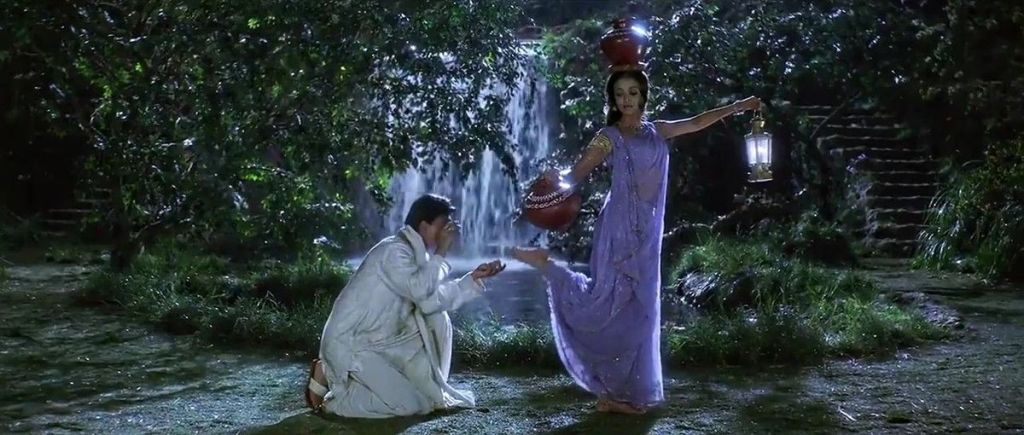
I watched Devdas more than a hundred times. Once, I was preparing for a dance audition in school and was practising a dance on Kaahe Chhed. We brought home a DVD, but instead of rehearsing, I began watching the film every day. Sometimes twice. I was eleven then, an age when love is pure imitation and devotion without caution. My family would ask me to recite dialogues of the film for guests, and I did so proudly, dramatically, and wildly. Every tone, every pause, every breath. I knew it all.
Years later, in 2015, I studied the film in a more formal way. I read the novel. I watched the old Hindi, Assamese and Bengali adaptations. I compared execution and performances. I understood the narrative through time. And in that process, I reached a quiet saturation. Like when one loves something so deeply and so constantly that one must step away in order to keep loving it. Devdas slowly went silent inside me. For almost ten years, I did not watch it.

Then, in 2025, I heard there would be a Shah Rukh Khan film festival. And Devdas would be screened. The news felt like someone calling my name from a past I had closed gently but not forgotten. My friends were unsure. Some had never seen it. But we went.
I did not know what to expect from the audience. Would they be restless? Would they laugh at the grandness of it all? But when the film began, people responded with love. They spoke the important lines softly, like prayers they had known since childhood. Not loudly, not for attention, but with memory.
Sitting there, I realised something I had never fully understood before. I had never been alone in loving this film. There were others like me. Scattered across time. Carrying the same ache. Holding the same softness. To find them, not through conversation but through shared silence in a dark theatre, was something I will remember for a long time.
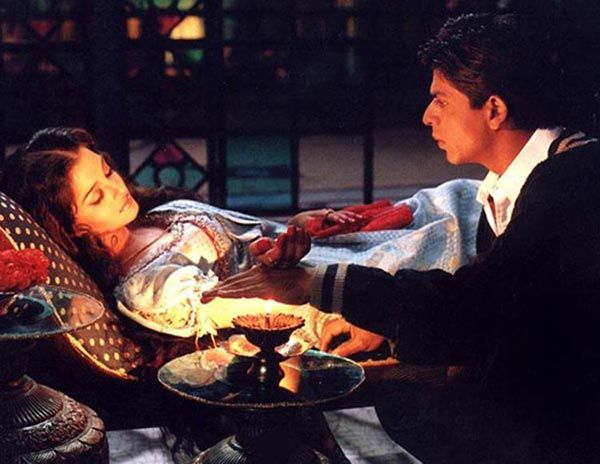
It is one thing to love something alone. It is another to discover your tribe in the dark, lit only by a projector beam. Some films stay with you not because they end, but because they continue inside you.
Devdas, for me, has always been exactly that. A story of love that hurts. Beauty that devastates. Memory that refuses to fade.

And through it all, it has always been him, Shah Rukh, who taught me that love can be ruin and redemption at once, that a gaze can hold both storm and surrender, and that sometimes the most enduring home we find is in the ache he leaves behind.
 World of Shubhika
Leave a comment