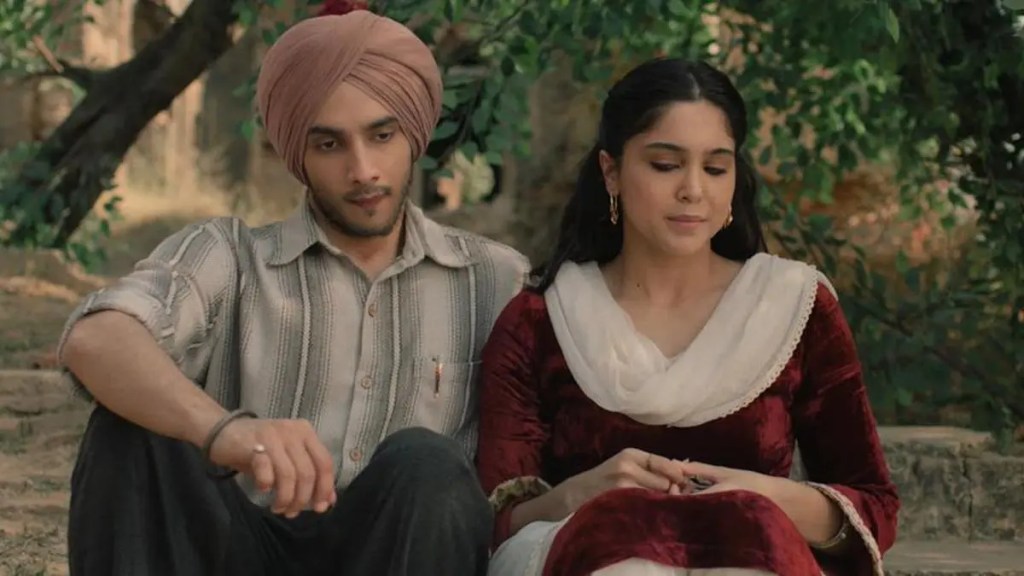
In the past four or five years, I have very consciously chosen to stay away from films that can sit heavily on the heart. Gone are the days when I could watch anything and everything. Not because I mind crying. I cry while watching films. I am a crier, and I have never seen that as a bad thing. If a film moves me to tears, I usually take it as a good sign. It means something reached me.
But after ages, I felt what I felt while watching Main Vaapas Aaunga.
I was told that I have never cried this much during any other film. And yes, I haven’t. By the time the second half began, tears had become my default state. I do not remember a single stretch of the film when I was not crying. And when it ended, for perhaps the first time, I had nothing to say. All I could manage was, “This is such an important film. This is such a well intentioned film.”
Those who know me know that I have dedicated almost a decade of my life to Partition. By that I mean reading about it, watching everything I could find about it, reading fiction and non fiction, talking endlessly about it. So much so that it became a part of my personality. A friend once told me that Partition is not something I experienced or survived. It is not my story to tell. It is something my ancestors left behind, so I could chill.
And though I have tried to chill since then, I have never really been able to part ways with this subject. No matter how much I tried, the melancholy remained a part of my existence.
As a third generation survivor, I have always felt that remembering is important. I have heard stories from people who lived through it. I have heard stories from their children. I have grown up carrying memories that were not mine and yet somehow became a part of me. I have often felt that I know something that so many other people have no idea about. Some of my non Punjabi and non Bengali friends have expressed genuine surprise when conversations about Partition came up. I even remember being asked once if it had really happened. That question stayed with me.
As much as I wanted to consciously distance myself from the subject, I also felt that it was too important to look away from. People did not know enough about it. And I wanted them to. Not just the suffering, but also the empathy. Because that part is important too.
And that is what I really loved about this film. It wants you to remember. It wants to revive the empath in you.
There is so much to talk about when it comes to this film, and I do not know why I am not really talking about it as a piece of craft. Maybe because, right now, that does not feel important. What feels important is the intention. And this has to be one of the most well intentioned films I have seen in a very long time.
I have been watching so many reels of people talking about their grandparents after watching this film. It reminded me of my grandmother too.
This year marks twenty years of living without her.
She was a survivor of Partition, of the bifurcation of this nation. She would often tell me stories of life before Partition, during Partition, and after Partition. This film made me miss her deeply.
I cannot quite put into words how much I loved this film.
To talk about it more critically, I think I would need a rewatch. A viewing where I watch more with my brain and less with my heart. But I do not think that is possible. And I do not think it is necessary either.
I just love this film so much. And I am so elated, so grateful, that it got made.
I do not know how long this feeling will stay. I do not know whether it is too soon to say that this film has changed me. But I hope whatever I am feeling right now remains with me.
I hope I always remember this feeling.


Leave a Reply